TABLE OF CONTENT:
- What is Patient Care?
- Why Private Patient Care Service is Needed?
- When It Is Appropriate or Even Preferable to Seek In-Home Patient Care?
- Meet our two types of caregivers for patient care.
- What Patient Care Attendants(PCA) do?
- What Diploma Nurses do?
- Comparison Table of caregiver duties.
- Use-cases – When to choose which caregivers
- A quick visual guide
- Approximate cost of patient care service.
- BD Homecare: Why choose our caregiver agency?
If you have time shortage then jump to caregiver’s duty comparison table or for quick visual guide and salary comparison jump to this section.
What is Patient Care?
At its core, patient care is the provision of specialized medical, physical, and emotional support to individuals who are unable to fully care for themselves due to illness, injury, or age. While the term often conjures images of hospital wards and clinical settings, modern patient care has shifted toward a more holistic, person-centered approach. It is not merely about administering medication; it is about maintaining a patient’s dignity, ensuring their safety, and improving their overall quality of life. In a home-based setting, patient care bridges the gap between clinical necessity and the comfort of one’s own environment.
Why Private Patient Care Service is Needed?
In the traditional healthcare model, a hospital or skilled nursing facility is often seen as the default setting for recovery or long-term care. However, for many individuals, this setting introduces a host of unintended stressors that can actually hinder healing. Private, in-home patient care has emerged not as a luxury, but as a clinically beneficial alternative that addresses several critical shortcomings of institutional care.
1. The Power of One-to-One Care
The most fundamental advantage of private patient care is the ratio of caregiver to patient. In a typical hospital ward or nursing home, a single registered nurse may be responsible for ten, fifteen, or even more patients on a given shift. This inevitably leads to delayed responses to call bells, rushed medication passes, and minimal time for genuine human connection. In stark contrast, private in-home care provides a dedicated caregiver focused exclusively on one individual. This means that subtle changes in a patient’s condition—a slight confusion, a change in skin color, or a loss of appetite—are noticed immediately, not hours later during a routine check. For the patient, it means never feeling like a burden for asking for a glass of water or assistance walking to the bathroom.
2. Unmatched Personalization and Continuity
Hospitals operate on rigid schedules: meals at set times, baths on certain days, and rounds by rotating staff. Patients often meet a new nurse every eight hours, leading to fragmented, impersonal care. Private patient care flips this model. A caregiver who arrives at the same time each day learns the patient’s preferences: exactly how they take their coffee, which arm is sorest in the morning, what music calms them during an anxiety attack, or the specific routine they prefer for bedtime. This continuity of care reduces confusion in dementia patients and builds a trusting therapeutic relationship that is simply impossible to achieve in a rotating-staff environment.
3. Dramatically Reduced Risk of Infection
Hospitals, despite their best sterilization efforts, are reservoirs of dangerous pathogens—C. diff, MRSA, VRE, and seasonal influenza. For an elderly patient or someone with a compromised immune system, a hospital stay intended to treat one problem can tragically lead to a secondary, often more severe, hospital-acquired infection. The US Centers for Disease Control and Prevention (CDC) estimates that one in 31 hospital patients has at least one healthcare-associated infection on any given day, the situation is worse in Bangladesh. Private in-home care eliminates this risk almost entirely. The patient remains in their own clean environment, with no exposure to sick roommates, contaminated waiting rooms, or high-touch surfaces shared by hundreds of strangers.
4. Cost Effectiveness Compared to Hospitalization
This is a pragmatic reality for many families. The daily cost of a private hospital room in Dhaka, Chittagong or large metropolitan cities can range from several thousand taka to upwards of ten thousand taka, not including surgical or physician fees. Long-term care facilities, while less expensive, still carry significant daily rates. Private in-home patient care, even with a diploma nurse for specialized needs, is almost invariably a fraction of the cost of a hospital bed. Families pay only for the hours of service required—whether that is 24/7 live-in care or a four-hour daily check-in—without the overhead fees of a large institution. This allows families to preserve financial resources for medications, therapies, or other necessities without sacrificing quality of care.
5. Close Proximity to Family and Emotional Well-Being
A hospital’s visiting hours, even when liberal, create a barrier between the patient and their support system. Spouses grow exhausted from long commutes and uncomfortable waiting-room chairs. Grandchildren may be restricted from visiting during flu season. In-home care collapses this distance. Family members can walk in and out freely, share meals, sleep in their own beds nearby, and remain actively involved in daily care decisions. For the patient, the psychological benefit is immense. Healing is not just a physical process; it requires emotional safety. Being surrounded by personal photographs, familiar smells, one’s own pets, and the sound of family members moving about the house reduces the delirium, anxiety, and depression that so commonly plague hospitalized elderly patients.
6. Faster Recovery Through Familiar Environment
Studies consistently show that patients who recover at home with professional support have lower readmission rates than those discharged to skilled nursing facilities. The reason is intuitive: at home, patients sleep better (no noisy roommates or beeping monitors), eat better (food they actually like, prepared to their taste), and move more naturally (walking to the bathroom or kitchen rather than staying bed-bound). This holistic environment stimulates appetite, mobility, and morale—all of which accelerate wound healing and functional recovery.
In short, private patient care is needed because it treats the patient as a whole person living in a real life, not as a diagnosis occupying a numbered bed.
When It Is Appropriate or Even Preferable to Seek In-Home Patient Care?
While the hospital remains the correct setting for acute emergencies, major surgeries requiring intensive monitoring, or unstable vital signs, a vast spectrum of healthcare scenarios exists where in-home patient care is not merely acceptable but clinically preferable. Knowing when to make that transition is key to ensuring safety without compromising outcomes.
1. Post-Surgical Recovery Without Complications
After an elective surgery—such as a joint replacement (hip or knee), spinal procedure, or abdominal operation—patients are often discharged as soon as they are medically stable, not when they are fully healed. The first two to four weeks at home are the highest-risk period for falls, wound infections, and medication errors. This is precisely when private patient care shines. A diploma nurse or PCA can monitor the surgical site for signs of infection, assist with prescribed exercises, ensure proper pain medication timing, and help the patient safely navigate stairs or get in and out of bed. For a patient living alone or with an elderly spouse who cannot lift, professional in-home care is not just preferable—it is essential to prevent a readmission.
2. Chronic Disease Management (Stable Phase)
Patients with congestive heart failure (CHF), chronic obstructive pulmonary disease (COPD), diabetes, or Parkinson’s disease do not need to live in a hospital. They need consistent, vigilant support at home. In-home care is appropriate when the patient’s condition is stable but requires daily monitoring—checking weight for fluid retention (CHF), reminding oxygen use (COPD), ensuring insulin is taken with meals (diabetes), or assisting with mobility and fall prevention (Parkinson’s). A skilled caregiver can track early warning signs (e.g., increasing shortness of breath, swelling in the ankles) and alert the family or physician before a crisis escalates into a 911 call. In this model, the home becomes a safer, calmer alternative to a nursing home.
3. Neurodegenerative Conditions (Alzheimer’s, Dementia, ALS)
For families navigating a diagnosis of Alzheimer’s or another dementia, the question is never whether help is needed, but where that help should be provided. Institutional memory care units can be disorienting, leading to increased agitation, elopement attempts, and rapid decline. In-home patient care is often vastly preferable for early to moderate stages. A caregiver trained in dementia care can maintain the patient’s familiar routines, reduce sundowning anxiety by keeping evening environments calm, and provide safety supervision without the trauma of relocation. For ALS or multiple sclerosis patients, in-home care allows for the use of specialized equipment (hoists, specialized beds) within accessible home modifications, avoiding the sterile, institutional feel of a long-term care facility.
4. Palliative and End-of-Life (Hospice-Eligible) Care
When the goal of care shifts from cure to comfort, the hospital is almost never the best place. For patients with a prognosis of six months or less—whether from metastatic cancer, end-stage organ failure, or frailty of advanced age—in-home patient care is the gold standard. A diploma nurse can manage complex symptom control (pain, nausea, terminal agitation, respiratory secretions) while a PCA provides hygiene, positioning, and companionship. The patient can die with dignity in their own bed, surrounded by family, without the bright lights, beeping monitors, and impersonal shifts of a hospital ward. In fact, research shows that patients who receive end-of-life care at home report higher quality of life and families report fewer regrets than those who die in an institution.
5. Caregiver Burnout Relief (Respite Care)
Finally, it is appropriate to seek in-home patient care even when the patient is not critically ill—specifically, to support the family caregiver. Spouses or adult children providing unpaid care often sacrifice their own health, sleep, and sanity. When the family caregiver is exhausted, depressed, or developing their own stress-related illnesses, hiring professional in-home care for even 10 to 20 hours a week is not a luxury; it is a medical necessity for the household. This allows the family to remain the primary source of love and companionship while professionals handle the heavy lifting, bathing, or nighttime wake-ups.
The Bottom Line: You should seek in-home patient care when the patient is medically stable (or in a comfort-focused phase), when the home environment can be made safe, and when the presence of a dedicated one-to-one caregiver would provide better supervision, lower infection risk, and greater emotional well-being than a hospital or nursing home. For millions of patients—from post-op knees to dementia grandparent—the answer is not another admission. The answer is at home, with the right professional by their side.
Our Care-giving Professionals
To meet the diverse needs of our clients, we categorize our services into two distinct professional tiers:
- Patient Care Attendants (PCA): Highly trained support staff (6-month certification) focused on “Activities of Daily Living” (ADLs) and general wellbeing.
- Diploma Nurses: Licensed medical professionals (3-year diploma) capable of performing clinical procedures and managing complex medical cases.
The Role of a Patient Care Attendant (PCA)
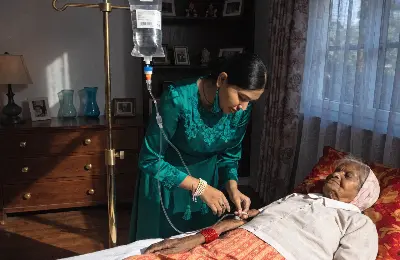
A PCA is the “boots on the ground” for daily life. Their work ensures the patient is clean, fed, and mobile. Their responsibilities include:
- Personal Hygiene Assistance: This includes sponge baths, assisted showering, hair care, and oral hygiene. For bedridden patients, this includes meticulous skin care to prevent pressure sores (bedsores).
- Toileting and Incontinence Care: Managing bedpans, changing adult diapers, and ensuring the patient remains dry and comfortable to prevent skin breakdowns.
- Mobility and Transfer: Helping patients move from bed to wheelchair, assisting with walking (ambulation), and performing passive range-of-motion exercises to prevent muscle atrophy.
- Vital Sign Monitoring: PCAs are trained to take basic readings such as blood pressure, temperature, and pulse, reporting any deviations to family or supervisors.
- Companionship and Emotional Support: Perhaps most importantly, PCAs provide social interaction, reducing the depression and isolation often felt by those with limited mobility.
- Nutritional Support: Subject to availability and negotiation, PCAs can assist with meal preparation according to dietary restrictions and provide physical help with feeding for patients with limited mobility or tremors.
Additional Responsibilities of a Diploma Nurse
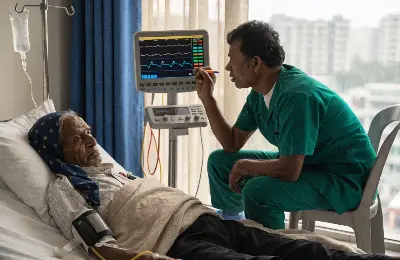
While a PCA focuses on support, a Diploma Nurse focuses on clinical intervention. In addition to all the tasks performed by a PCA, a Diploma Nurse is qualified to handle:
- Medication Administration & Management: This includes complex dosing schedules, intramuscular (IM) or intravenous (IV) injections, and monitoring for adverse drug reactions.
- Wound Care and Dressing: Managing surgical incisions, deep pressure ulcers, or diabetic wounds that require sterile techniques and clinical assessment.
- Catheter and Ryle’s Tube Management: Insertion, cleaning, and maintenance of urinary catheters and feeding tubes (NG tubes).
- Oxygen Therapy & Ventilator Support: Monitoring oxygen saturation levels, managing oxygen concentrators, and assisting patients who require mechanical breathing support.
- Tracheostomy Care: Performing the specialized cleaning and suctioning required for patients with a permanent or temporary tracheostomy tube.
- Clinical Judgment: A nurse is trained to interpret vital signs and symptoms to anticipate medical crises before they happen, acting as a liaison between the patient and their primary physician.
| Features | Basic Caregiver | PCA | Diploma Nurse |
|---|---|---|---|
| Giving Company | yes | yes | yes |
| Help in moving | yes | yes | yes |
| Bathing & Dressing | yes | yes | yes |
| Medication Reminders | yes | yes | yes |
| Light Housekeeping | yes | yes | no |
| Wound Dressing (Simple) | no | yes | yes |
| Feeding (NG Tube) | no | yes | yes |
| Diaper change | no | yes | yes |
| Condom Catheter, Catheter Pant, Urine box | no | yes | yes |
| Vital Signs Monitoring | no | depends | yes |
| Emergency Response | no | depends | yes |
| Catheter setup | no | no | yes |
| Injection (IM/SC) | no | no | yes |
| Wound Care (Surgical) | no | no | yes |
| IV Administration | no | no | yes |
| NG Tube setup | no | no | yes |
| Tracheostomy Care | no | no | yes |
Real-Life Scenarios : When to Choose a Diploma Nurse vs. a PCA
Selecting the right caregiver is not just about cost—it’s about safety, clinical needs, and quality of life. Below are specific scenarios to help you determine whether a Diploma Nurse (3 years training) or a Patient Care Attendant (PCA, 6 months training) is the appropriate fit.
Case 1: If an elderly person is mainly suffering from age related weakness, have no apparent medical condition requiring medical intervention, who can swallow food without any problem and do not need help in toileting(may need help walking to and from the bathroom), this may be an ideal case for our Basic Caregiver which is also the cheapest option for elderly care. A basic caregiver can help everyday life easier for the elderly person.
Case 2: But anything more than that and most likely you at least need a PCA. For example when the patient needs help with toileting (with a bedpan, commode, requires diaper changes), bathing, dressing, grooming, and feeding (provided they can swallow safely and have no choking history) you need PCA. PCA can help with Routine Activities of Daily Living (ADLs).
Case 3: If a patient who is weak but medically stable—e.g., recovering from a mild stroke with no swallowing issues, or an elderly person with osteoarthritis, PCA would be a good choice for them. PCA helps with safe transfers (bed to wheelchair), walking with a cane, and range-of-motion exercises.
Case 4: If the patient is independent with their own pills but forgetful (early dementia), a PCA can offer verbal reminders to take pre-sorted medications and observe that they are swallowed—but never inject, or draw up insulin.
Case 5: When Companionship & Safety Supervision is required: For patients with mild cognitive decline who wander or feel lonely. PCA provides distraction, light meal preparation, light housekeeping related to the patient (e.g., changing soiled linens), and fall prevention (clearing clutter, helping with nonslip socks).
A PCA is a trained compassionate aide for maintenance of function, not medical intervention. PCA excels in the above mentioned scenarios(2 to 5) where the patient is stable and require non-clinical support.
More Complicated Scenarios:
Case 6: If your patient has just returned home from a hip replacement, abdominal surgery, or cardiac bypass and is now going through Post-Surgical Recovery (with drains or wounds), requires incision care, monitoring for infection (redness, swelling, fever), emptying surgical drains (e.g., Jackson-Pratt drains), or changing sterile dressings—this requires a nurse’s clinical training.
Case 7: If your patient is on intravenous (IV) antibiotics, insulin drips, or multiple high-risk medications (e.g., blood thinners like Warfarin requiring INR monitoring), in a word if the patient requires Complex Medication Management then it require a nurse’s expertise. A diploma nurse can administer injections, set up IV lines, and recognize adverse drug reactions.
Case 8: If your patient suffers from Chronic Disease with Instability, and the patient has conditions like congestive heart failure (CHF) with sudden weight gain/fluid retention, COPD requiring oxygen titration, or late-stage Parkinson’s disease with swallowing difficulties (dysphagia), you need a nurse to monitor vitals, to listen to lung sounds, and for adjusting care plans daily.
Case 9: If the patient has a Stage 2 or higher pressure ulcer (bedsore) or a catheter (Foley), you’ll need a nurse for wound debridement, sterile catheter care, and preventing urosepsis.
A Diploma Nurse is a regulated medical professional capable of clinical judgment, invasive procedures, and emergency response. Hire a Diploma Nurse in these High-Acuity & Specialized Care situations(cases 6 to 9).
Quick Comparison Table (Visual Aid)
| Clinical Scenario | Diploma Nurse | PCA |
|---|---|---|
| Bedbound patient, stable, no wounds | ✅ Can do but costly | ✅ Best fit |
| Bathing, dressing, toileting | ✅ Overqualified | ✅ Ideal |
| Wound care (surgical incision, drain) | ✅ Required | ❌ Not allowed |
| Insulin injection or IV line | ✅ Required | ❌ Not allowed |
| Swallowing difficulty (dysphagia) | ✅ Assess risk | ❌ High risk |
| Oxygen monitoring & titration | ✅ Required | ❌ No |
Final Guidance
When in doubt, err on the side of a Diploma Nurse for the first 48 hours post-discharge. After stability is confirmed (e.g., wounds closed, vitals normal for 7 days), you may transition to a PCA for long-term custodial care, later you may even be able to transition to our Basic Caregiver if the patient doesn’t require any medical help and only requires help in day to day activities. Our care coordinators can perform a free assessment to match your loved one with the right professional—safely and without overpaying for unnecessary clinical oversight.
| 12 hours | 24 hours | 12 hours monthly | 24 hours monthly | |
|---|---|---|---|---|
| Basic Caregiver | 700 taka | 1,100 taka | 15,000–18,000 | 18,000–25,000 |
| Patient Care Attendant | 900 taka | 1,350 taka | 18,000–25,000 | 25,000–38,000 |
| Diploma Nurse | 1,100 taka | 1,700–2,200 taka | 25,000–40,000 | 40,000–60,000 |
| Nanny / Child Care | X | X | 14,000–18,000 | 18,000–25,000 |
Why Choose Our Caregiver agency & service?
Finding reliable home care is not just about filling a shift—it is about finding the right fit for your loved one. At BDHomecare, we operate on a philosophy that sets us apart from the conventional agency model in Bangladesh: we prioritize precision matching over generic placement.
Tailored Care, Not a One-Size-Fits-All Approach
We understand that the needs of a senior parent requiring companionship and gentle oversight in Gulshan / Banani differ vastly from the needs of a patient in Mirpur / Mohammadpur recovering from surgery who requires a trained Diploma Nurse. Many caregiver agencies, constrained by a limited roster of available staff, resort to sending whoever is free, often resulting in a mismatch—either an overqualified professional charging a premium for basic elderly care, or an under-prepared aide tasked with complex medical needs. At BDHomecare, we are actively building the largest and most diverse caregiver database in Bangladesh. This infrastructure allows us to perform a level of match-making that ensures you receive the precise level of care required—whether it’s a compassionate Personal Care Assistant (PCA) or a highly skilled Diploma Nurse—at the price point that accurately reflects the service.
Ethical Care Through Caregiver Satisfaction
The second cornerstone of our difference lies in our economic model. We have observed a cycle in the local caregiving industry where high commission fees lead to caregiver burnout and turnover. At BDHomecare, we take a deliberately smaller cut from our service fees. This means two vital things for families across Bangladesh: first, our services remain more affordable without compromising on quality or safety standards. Second, and perhaps more importantly, our caregivers take home the lion’s share of the bill. A caregiver who feels valued, fairly compensated, and not cheated by the system arrives at your home in Dhanmondi or Uttara with a genuine smile and a commitment to excellence. We firmly believe that ethical business practices—treating both the client and the caregiver with morality and respect—are not just good karma; they are the foundation for long-term, sustainable service. By earning a smaller profit on more families served, we ensure that the standard of care in Bangladesh rises for everyone.